
Case Study: The Retrofit of a 1900s Building
Background:
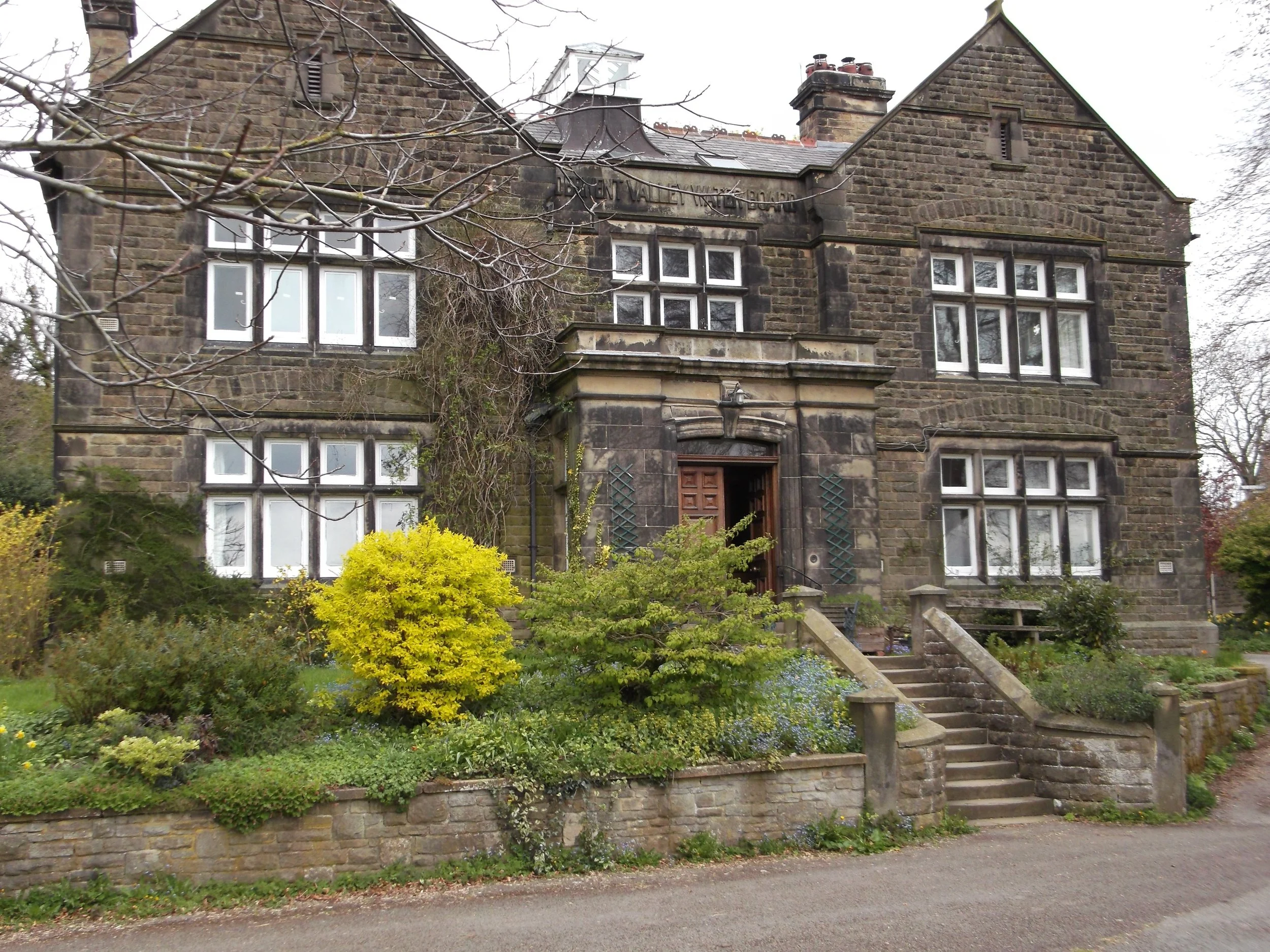
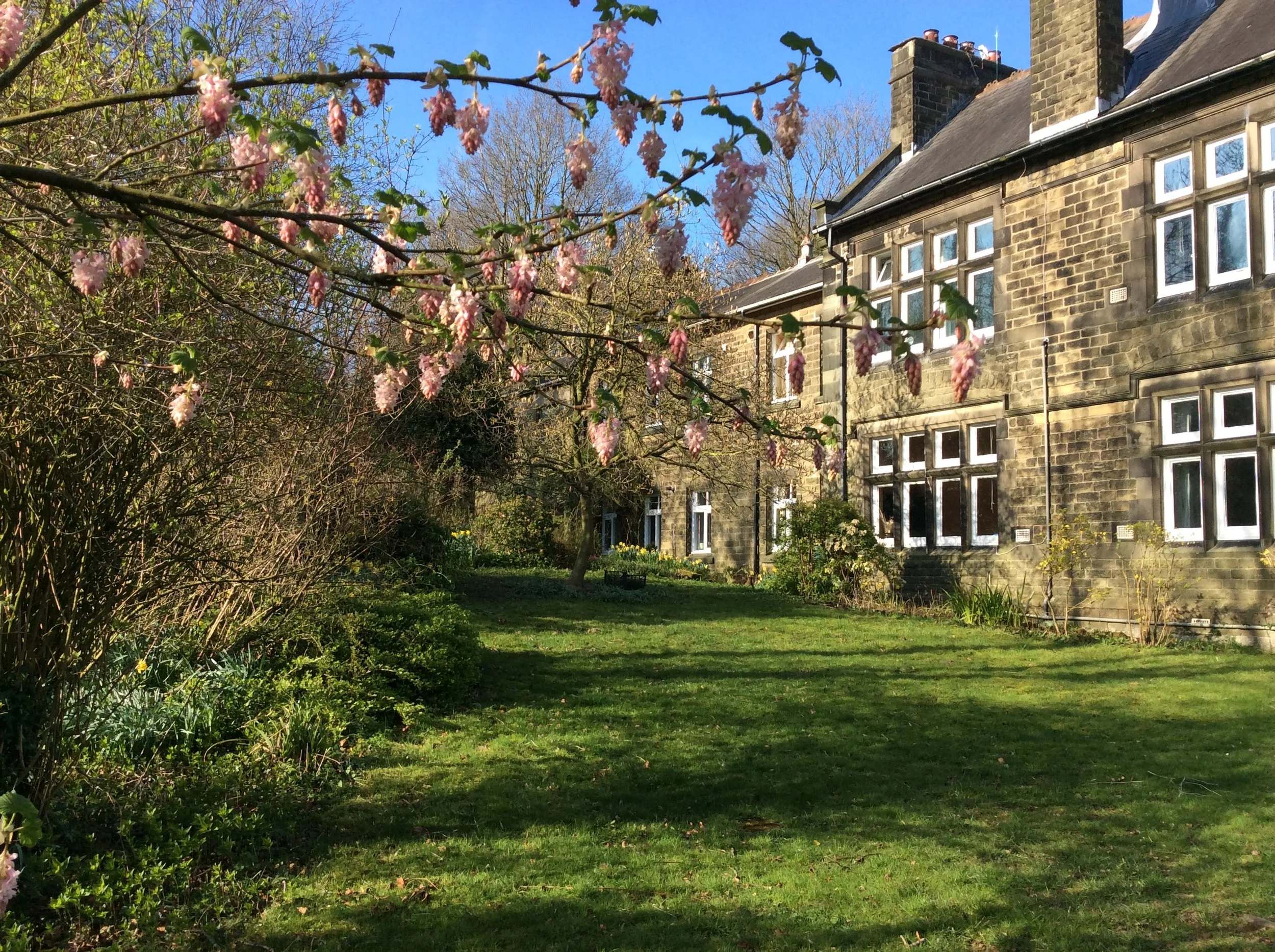
This case study examines the retrofit of a historic building located within the Peak District National Park, near the village of Bamford in Derbyshire. The building was completed in 1903 as the offices of the Derwent Water Board and was later purchased by a Quaker community in 1988, when it was converted into residential accommodation.
Constructed with solid stone walls and slate roofs, the building retains several original features, including a Victorian-style roof lantern and suspended timber floors. Like many buildings of its age and construction, it was also highly draughty. These features, of a traditional-built, old building, plus the restrictions of being inside the Peak District National Park, make the building particularly challenging to retrofit.
Keep reading to follow their retrofit journey.
Brief History of the Building’s Retrofit
Over the decades, a number of energy-saving projects have been carried out on the building.
From 1988 until around 2010, the community operated mainly as a housing co-operative with families living in the building. During this time some loft insulation was installed, along with a large amount of secondary glazing and some early double glazing.
Between 2010 and 2012, during the gap between these communities, a more significant retrofit was undertaken. Before this work the building was very cold in winter and uncomfortable for most occupants.
In 2012, a new phase began, with the building being used for retreats, residential events and self-catering guests. When the community made a surplus from these activities, the money was used for further insulation work, as well as maintaining and improving the building.
Professional advice was also obtained at different points. Two energy surveys were carried out by Nick Parsons, in 2009 and in February 2020, the latter focusing on reducing draughts. A thermal imaging survey was also carried out in October 2020.
After COVID, the Quaker community was unable to attract new members and closed in summer 2023.
As this history shows, retrofit work was carried out by different people at different times, rather than as part of a single coordinated plan. In this case study, the insulation measures are therefore grouped by topic.
Loft Insulation
Loft insulation was one of the first areas considered when improving the building’s energy performance. For many years, the community believed that all the loft spaces had already been insulated. However, insulation standards have increased significantly over the past 35 years since the community first began carrying out energy improvements.
A survey of all the loft spaces carried out during the COVID period found that although every area had some insulation, none met the current recommended standard of around 270 mm (approximately one foot). One loft had less than 50 mm (about 2 inches) of insulation; around half had insulation only up to the level of the ceiling joists (roughly one third of the modern standard); and the remainder typically had around 75 mm (about 3 inches).
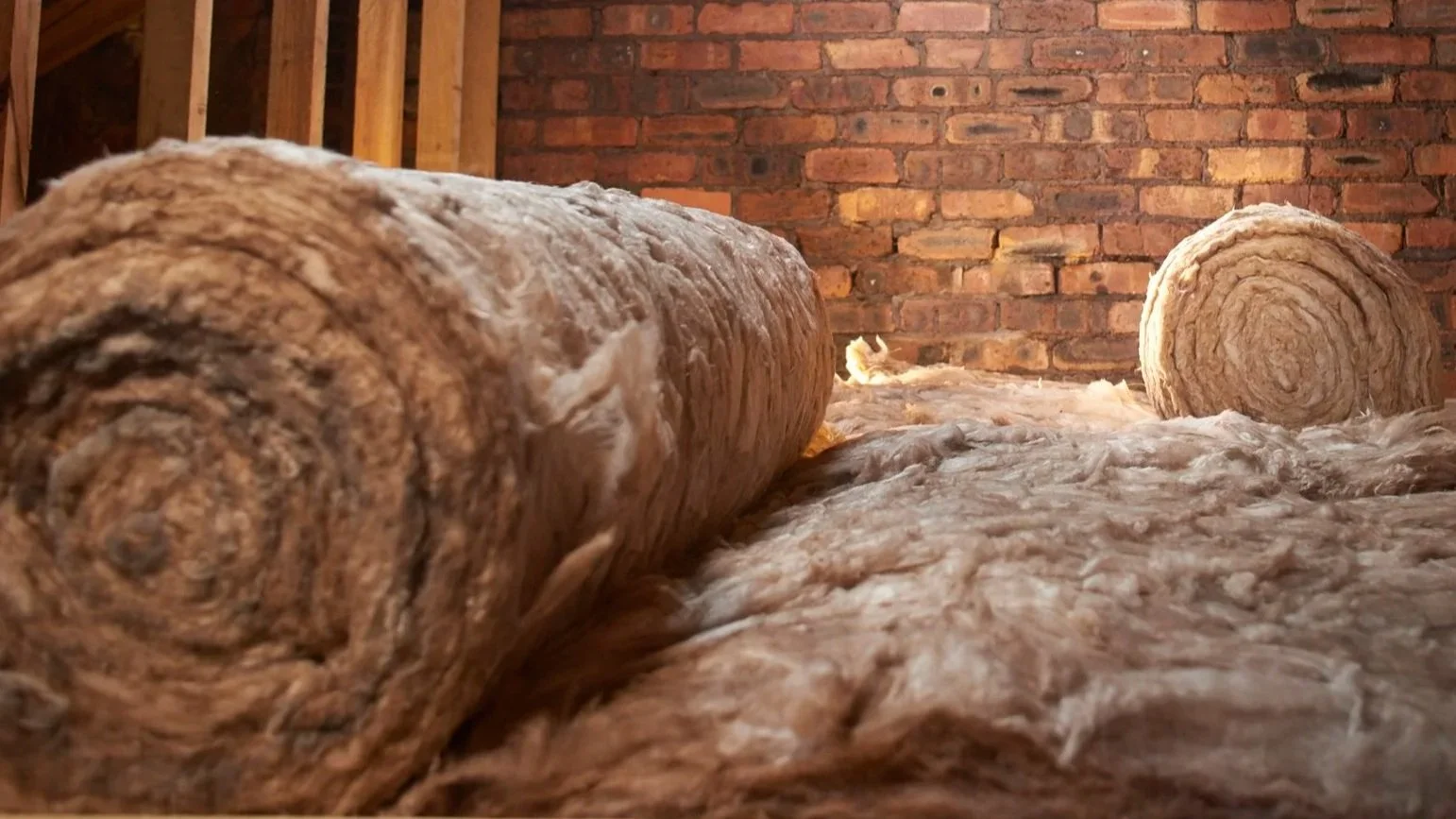
Example of Mineral Wool Insulation (photo not of the Quaker Building)
Energy advisor Nick Parsons advised that approximately 270 mm of mineral wool or similar insulation is needed to meet the recommended Building Regulations level, achieving a U-value of around 0.16 W/m²K.
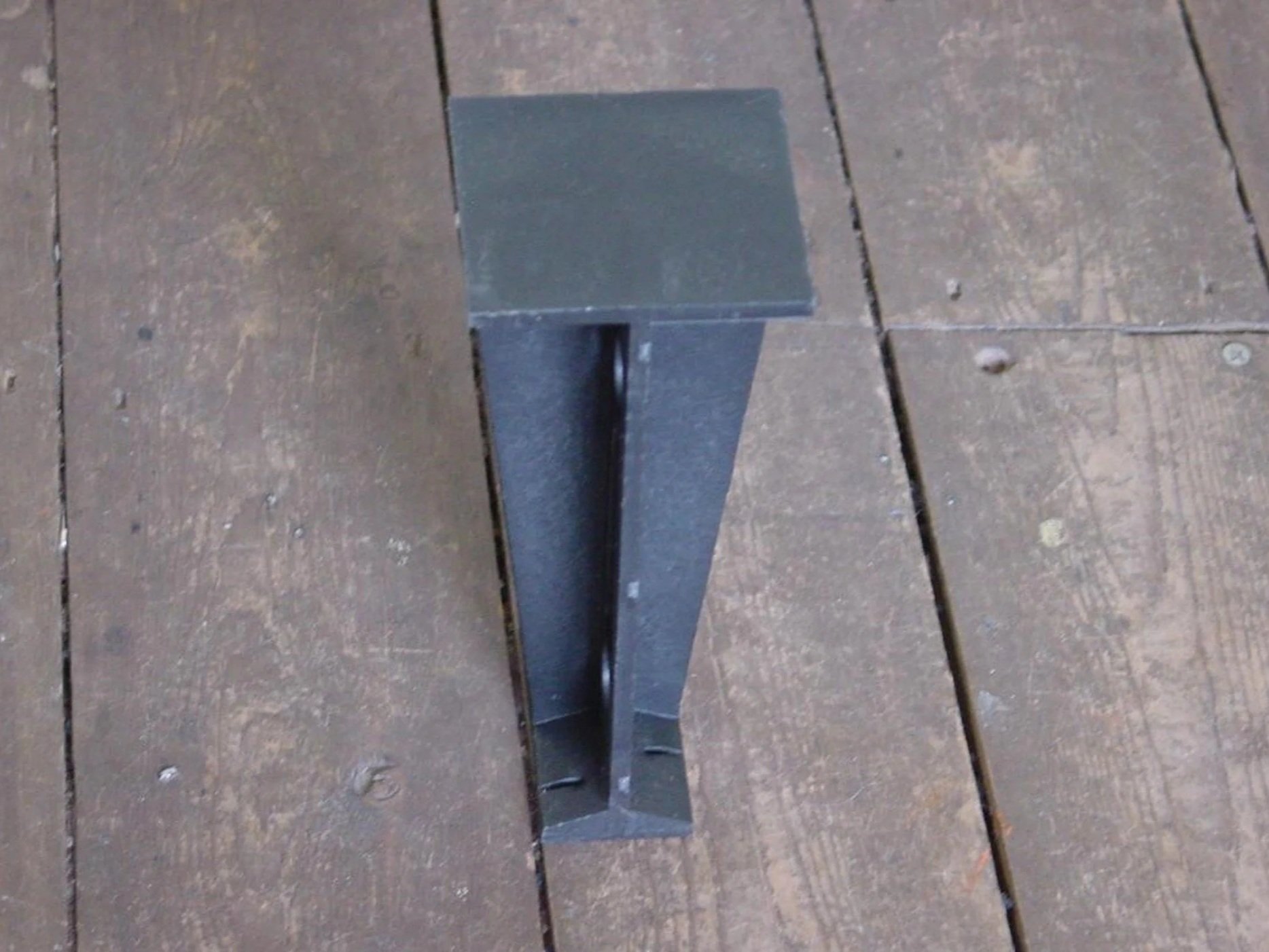
Loft Stilts
The community decided to bring one loft up to the modern insulation standard, as it sits above an upstairs living room. This loft had only about one third of the current recommended insulation level. It also had boarded flooring for storage, which the community wanted to retain because the space is easily accessible.
Simply replacing the boards over mineral wool insulation would compress it and reduce its effectiveness. One solution is to install loft stilts to raise the floor above the insulation (see image).
Instead Nick Parsons advised us that as we had existing boarding to provide support, they could put sheets of PIR on the old flooring and added new boards on top, which was quicker, easier and overall cheaper than using loft stilts. Although PIR is too floppy and weak on its own, if it is supported by an existing firm surface, then it only has to withstand compression pressure, which is not a problem.
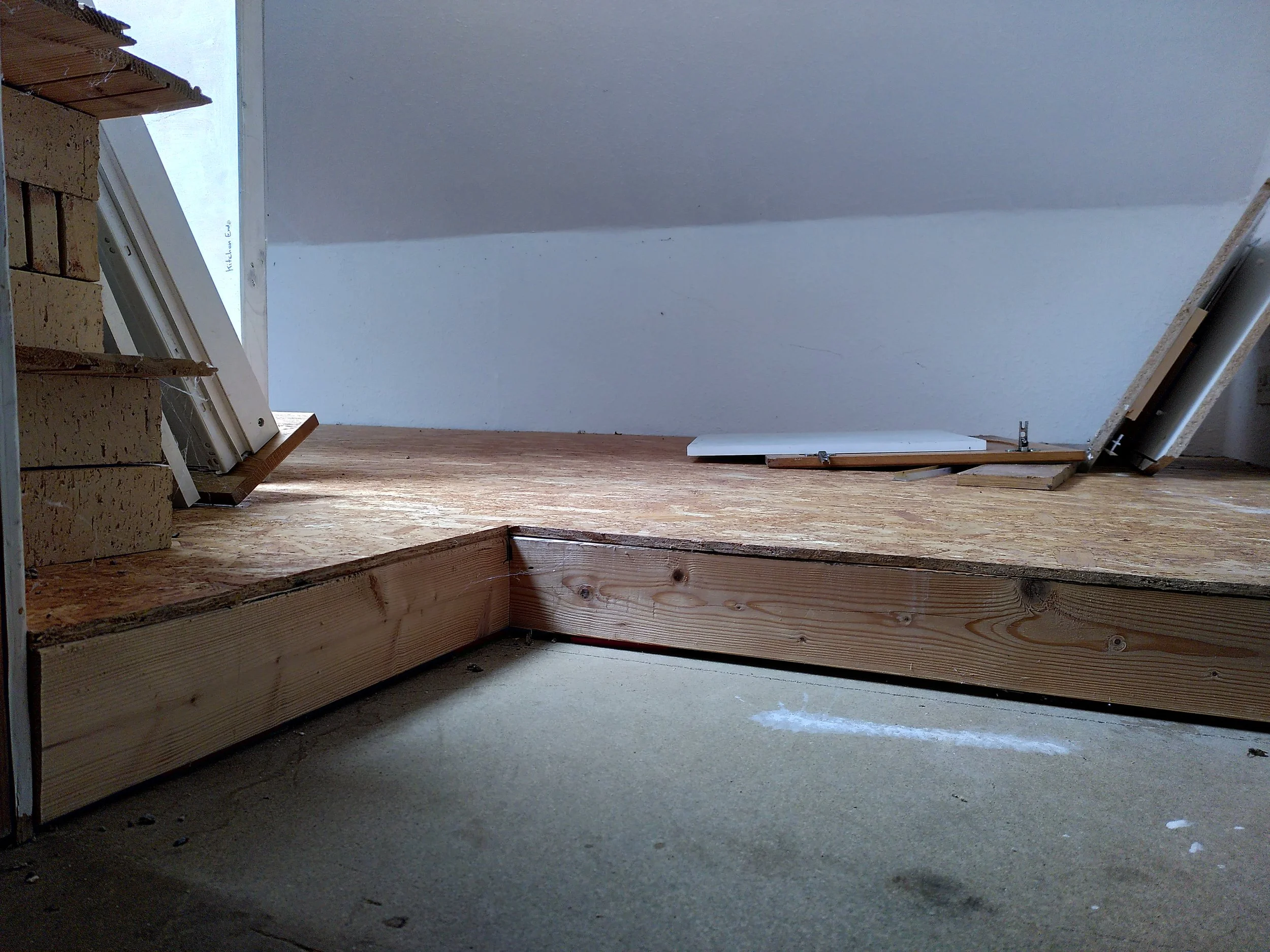
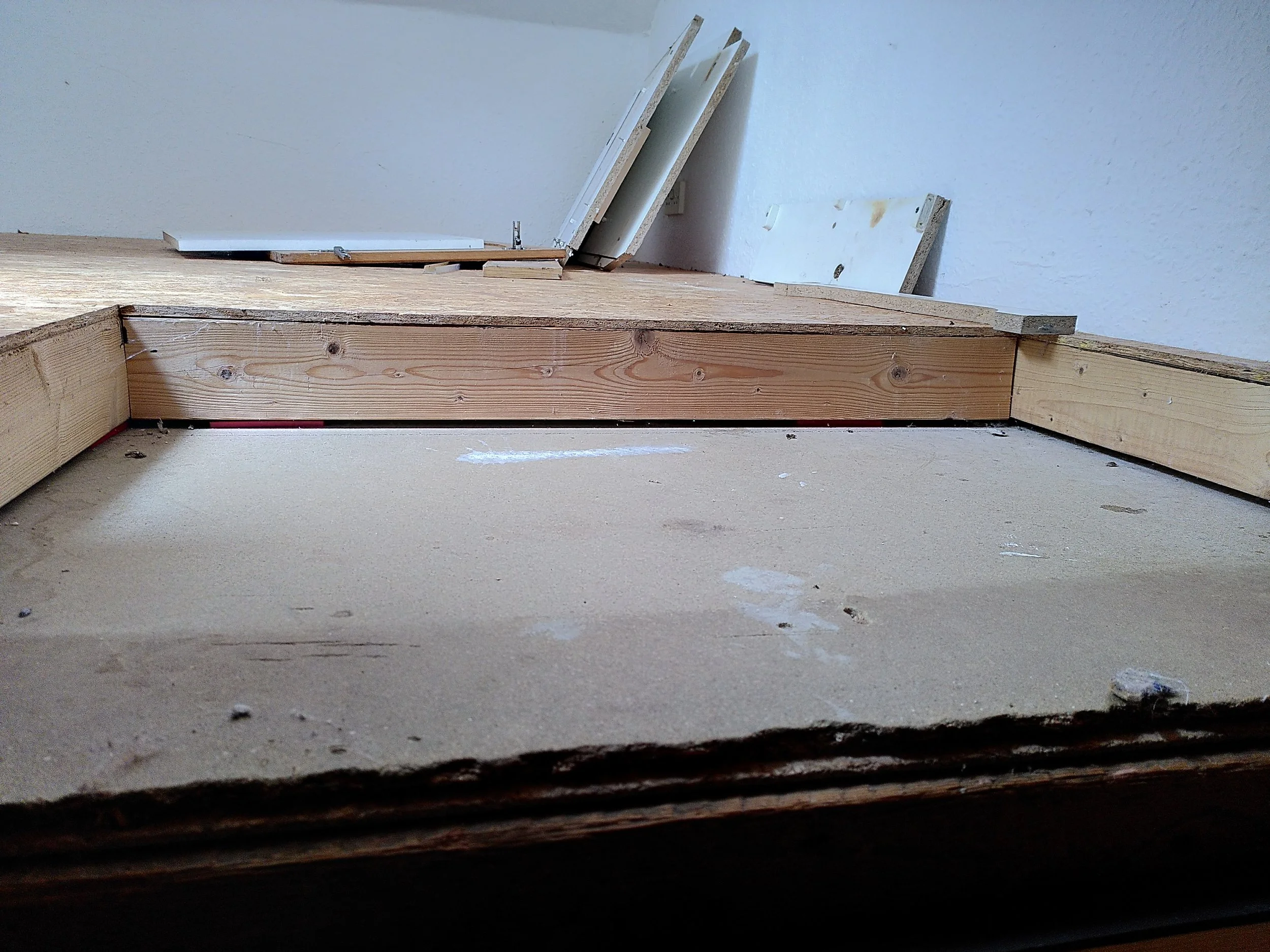
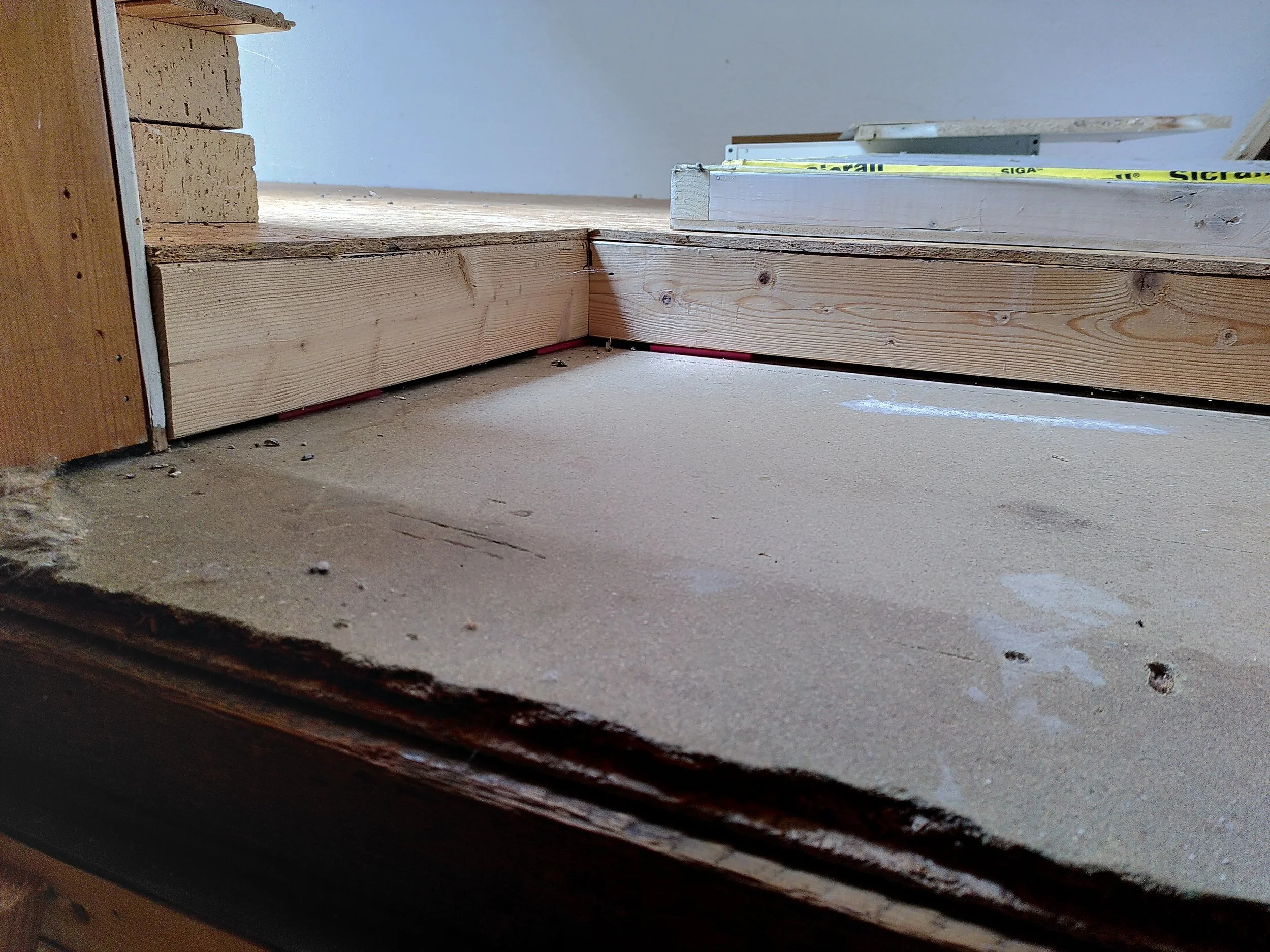
Due to the low ceiling in this corner, a small area near the loft hatch had to be left uninsulated to make it easier to climb into the loft. Here, you can see that the combined thickness of the PIR insulation and the boarding on top is much less than the thickness that mineral wool insulation would have required.
Insulating the loft hatch can be one of the most challenging parts of the process. In this case, they used a board slightly larger than the hatch opening, fixing insulation to it so it could sit snugly against the sides of the opening, effectively acting as an insulated lid.
After the loft insulation was completed, the living room below felt noticeably warmer and more comfortable immediately. This came as a surprise, as the loft already had insulation up to rafter level.
Internal Wall Insulation
As the building is a solid stone wall structure located within the Peak District National Park, cavity wall insulation was not possible, and external wall insulation was not a viable option. Instead, internal insulation was installed on all external walls. This has made a significant difference to comfort levels during winter. Before the insulation was installed, some guests said they would not visit in the winter months because the building remained very cold even when the heating was on full.
When installing internal wall insulation, there is always a risk that condensation can form behind the insulation. This can lead to mould growth and serious problems later on.
One way to reduce this risk is to use natural, breathable insulation materials allowing any moisture to ventilate out. However, in a large building this would have been very expensive. Instead, a vapour barrier was installed on the warm side of the insulation to prevent condensation from forming within the wall behind it. The Quaker Community used Kingspan PIR sheets, which have a vapour barrier on both sides of the insulation. The builders carefully sealed all gaps between and around the sheets, including around doors and windows, to create a continuous vapour and airtight barrier.

Internal wall insulation around the window - you can see that it has made deeper window sills.
Floor Insulation
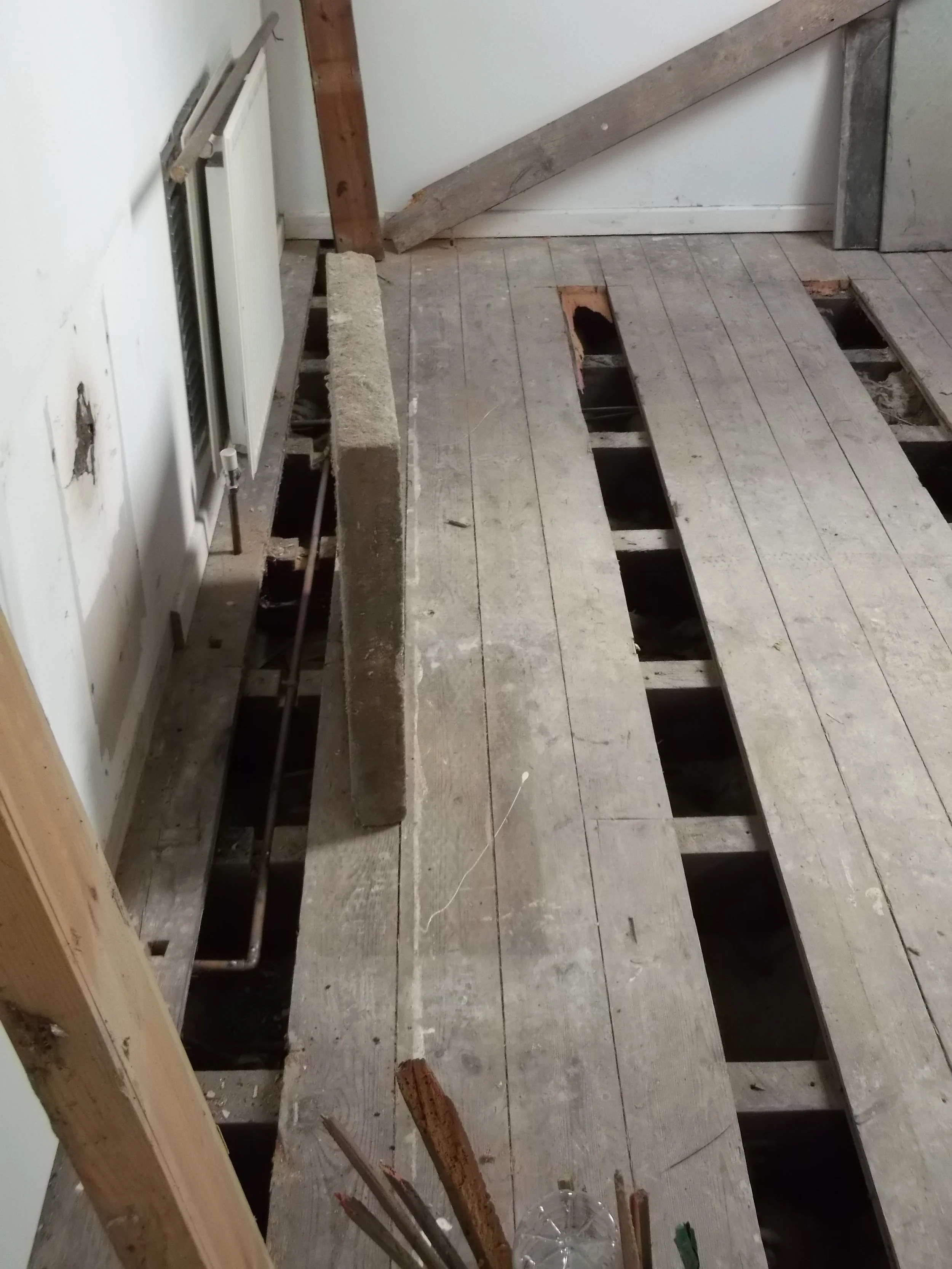
Many of our ground floor rooms are suspended timber floors. The Community did DIY underfloor insulation when renovating one space.
In 2020, the community applied to the Government’s Green Homes Grant scheme to fund underfloor insulation works. The application process had begun and contractor quotes were being obtained when the Government announced the withdrawal of the scheme. As a result, the application could not be progressed and the underfloor insulation was not completed. This setback, combined with the impacts of Covid, meant there has not been sufficient funding since to carry out further insulation work. At the time, the funds that would have been used for underfloor insulation were instead redirected towards additional double glazing.
Windows


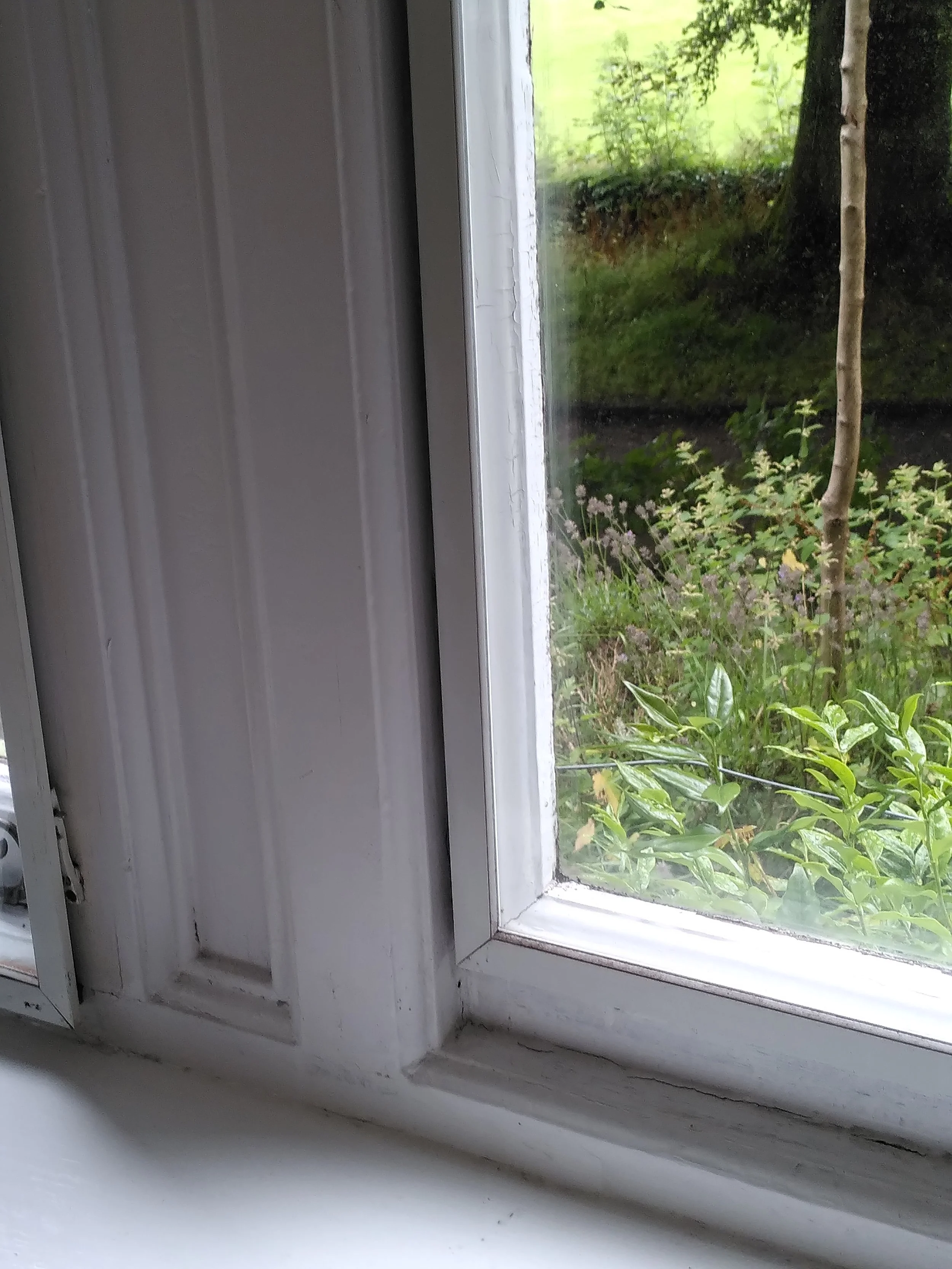

Over the years a great many different types of secondary glazing have been installed.
In 2022, the group went on to install high-spec double glazing featuring argon gas filling, warm edge spacers, and a low e-coating. The windows also include sash horns to maintain the appearance of the original sash design.


The new higher specification double glazing.
Draughts and ventilation
In 2020, the Community was advised to increase the intentional ventilation by putting in ducts, before doing any draught proofing. However, the recommendations increased the cost and the difficulty of draught proofing to the point that the group did not do anything for a few months as it all felt too difficult and expensive.
Some recommendations were:
Air supply to wood burners - external air supply ducts that are boxed in at skirting-board level and through external walls, could provide air to wood-burning stoves.
Ventilation fans - single-room heat recovery ventilation (SRHRV) units in rooms with un-flued appliances, such as gas cookers to increase the intentional inflow.
The group later discovered that ducting is the PAS 2035 preferred method of ventilation, but it does allow other forms including simply opening a window if needed. The group decided to prioritise better monitoring their lifestyle actions to manage moisture and ventilation, adding cooker hoods to extract moisture when cooking and burning gas, opening windows, and drying clothes outside.
Draught exclusion
The main-house hallway was very draughty, so the group have done two things.
Front doors
When the outer front door was left open, for example when expecting guests, the inner doors would often be blown open on windy days. The inner doors have now been adjusted to open only outwards, which not only prevents them from being forced open by the wind but also improves fire safety.
One of the doors is fitted with a catch so it remains closed unless both doors need to be opened. In addition, battens and brush draught strips have been installed around the edges to reduce draughts.
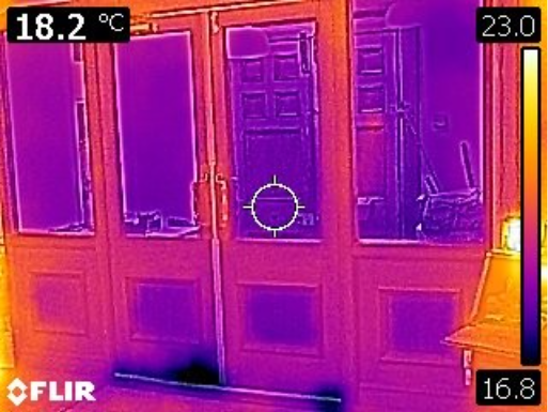
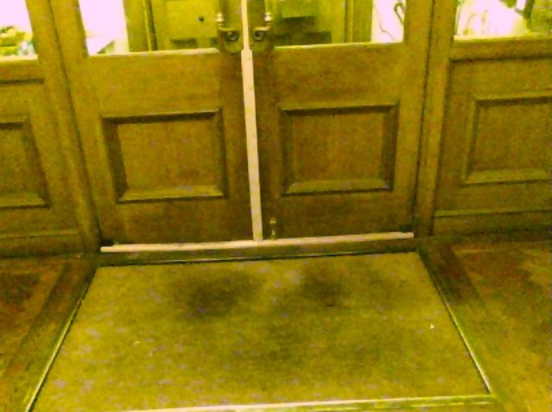
On the thermal image, you can see that prior to draught strips being added, cold air would enter through the bottom of the door.
Back porch
To further reduce draughts, the group wanted to add a porch to the back door. Rather than building an external porch, which would require planning permission in the Peak District National Park, they installed an internal door to close off the rear section of the corridor and create an internal porch instead.
Heating
In 2010/11 an inefficient oil-fired boiler was replaced with seven small gas boilers. In the main building this allows for zoning. One boiler heats the attic, first floor and ground floor bedrooms. The other boiler heats the kitchen, worship room, activity room and other ground floor radiators. This makes it possible to have the two different boiler circuits on different time schedules.
The boilers serve areas of the building that include a mix of living spaces and bedrooms. For most of the year, the group manages with heating in the morning and evening, and in winter it is also used briefly around dusk. Some of these additional living areas are also equipped with wood burners, with all the wood sourced from our own land.
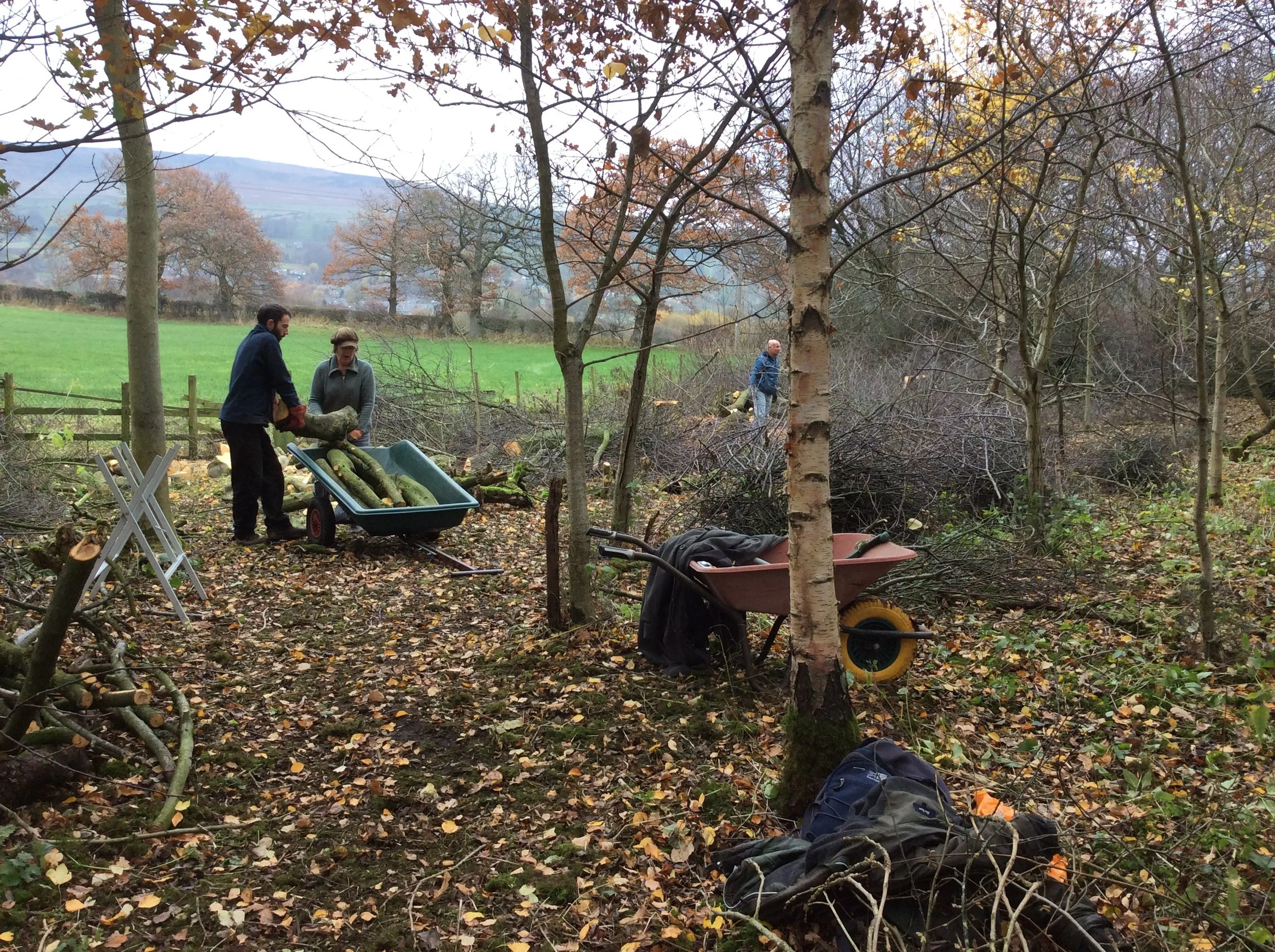
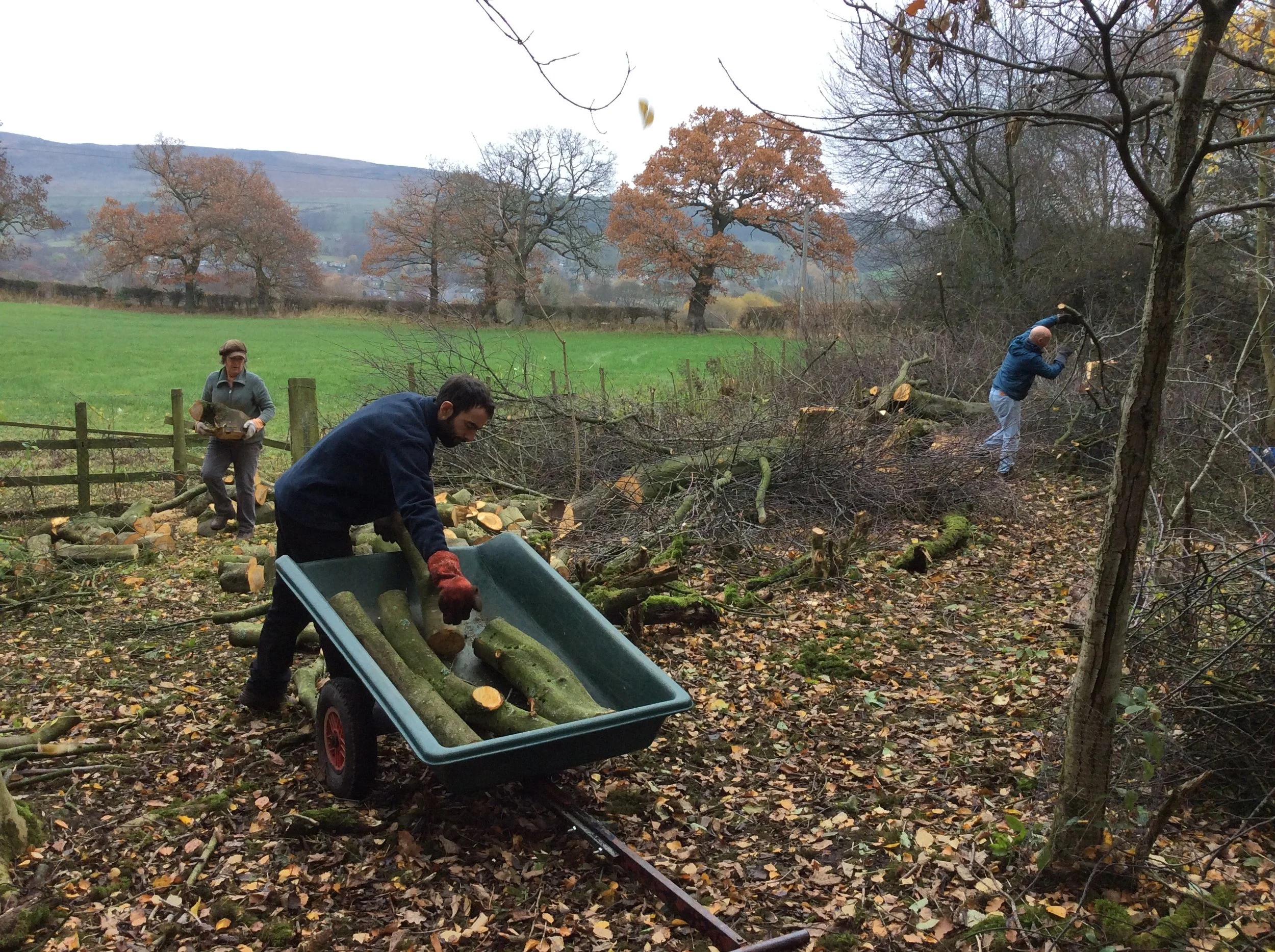
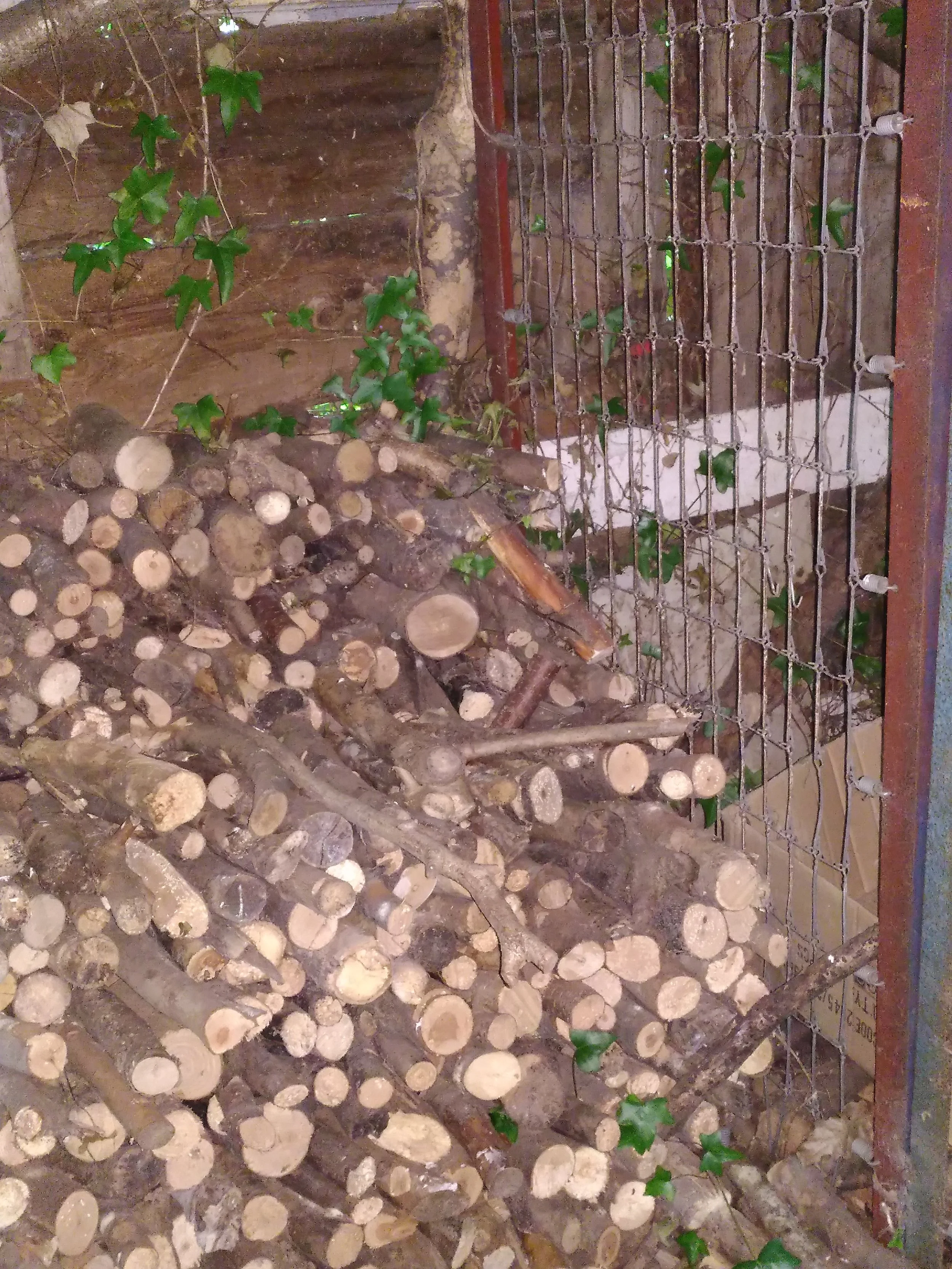
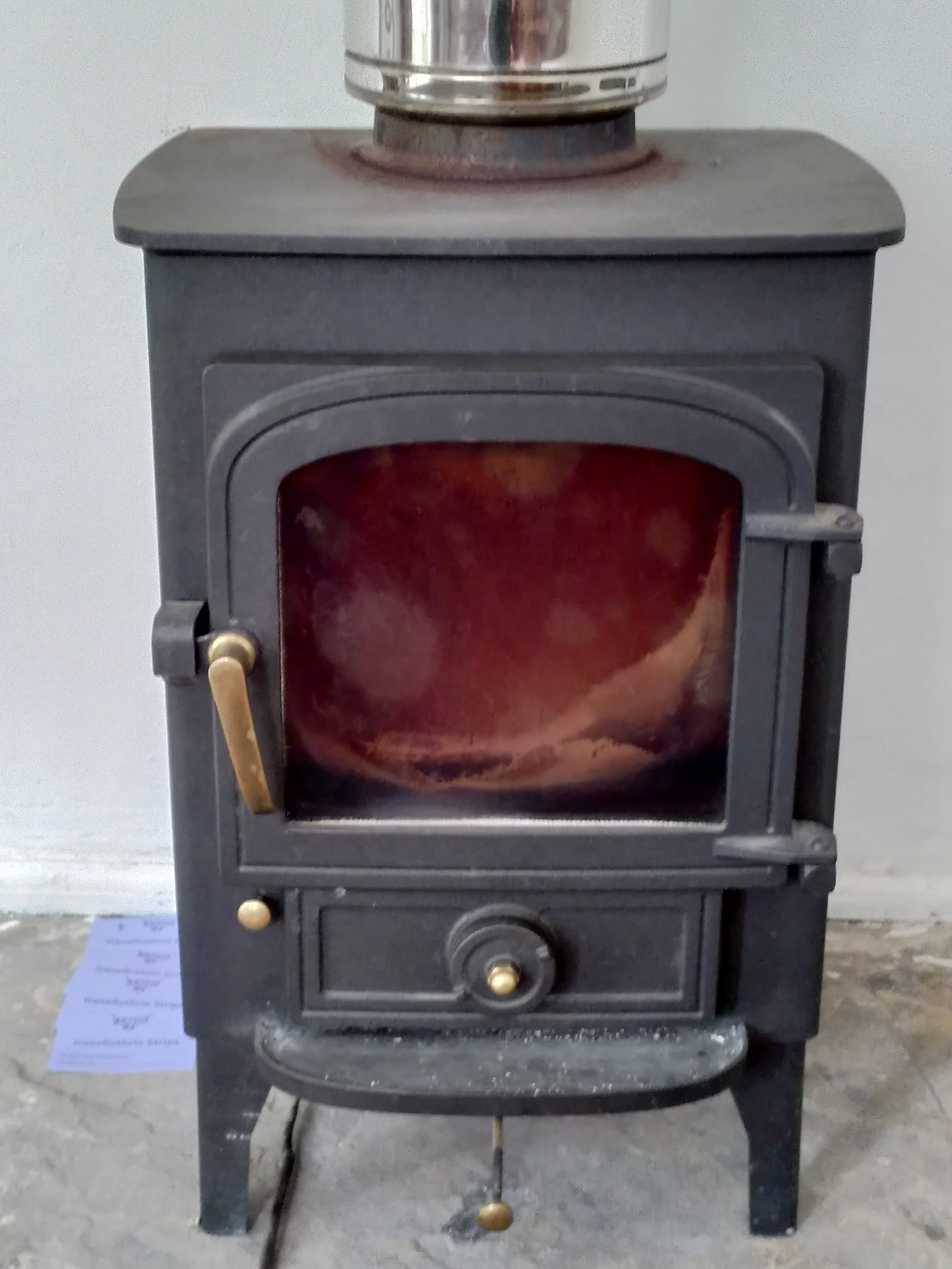
The group holds a woodland working week each November. Some years this involves felling or pollarding a large tree, while in others the focus is on coppicing. The wood is then sawn and split by hand, before being transported in wheelbarrows to drying bays.
From the drying bays, the wood is carefully stacked in a well‑ventilated store with four bays, allowing it to be used in rotation. This process results in a virtually zero carbon footprint. In some years, the wood is seasoned for up to two years in the drying bays, followed by nearly two more years in the wood store.
Throughout the house, they have Thermostatic Radiator Valves (TRVs) on every radiator. As well as turning off radiators that are not needed, for example in guest rooms when they are unoccupied, they can set radiators in areas such as halls or bathrooms to provide a low level of background heat. In very cold weather, they can also increase the setting on living room radiators from the usual level of 3 up to 4 or 5 (maximum).
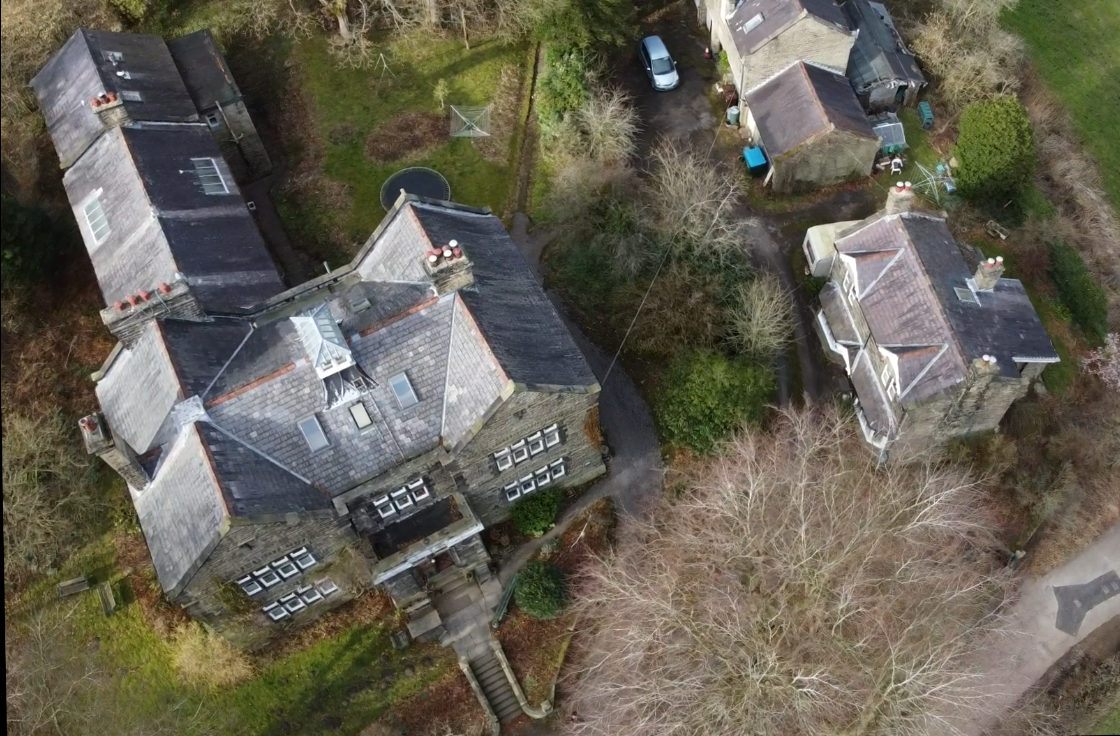
Aerial view of the building which required a large scale retrofit
Summary
The retrofit managed to vastly improve the energy performance of the property. Bringing the main front house’s Energy Performance Certificate (EPC) up to a D rating. The house on the right side was increased to a D rating as well, with the end house and the middle terrace reaching a C rating.
With retrofit improving the energy efficiency, comfort levels and lowering the running costs, the residents also picked up several sustainable interests. Of the eight people living in the property, four were vegan and one vegetarian, with three choosing not to own cars. They also opted to us bicycles or public transport where possible. Other decisions included not owning a tumble dryer and subscribing to ethical consumer.